Rainforest

Lomami National Park

Remote rainforest between the Lomami and Tshuapa rivers protects bonobos and other endemic wildlife.

RainforestWildlifeRiver travelLomami RiverBonobo forest

Location
Central Congo Basin, Democratic Republic of the Congo
Best window
Jun-Aug, Dec-Feb
Suggested stay
3-5 days
Go for
Rainforest expedition
The reason to go

Join an authorised forest expedition focused on bonobo habitat

The value is not guaranteed sightings but entering a research landscape where tracks, nests and forest structure reveal the presence of a species found nowhere outside the Congo Basin.

Use an experienced local guide and begin early, when wildlife activity, water levels and cooler conditions are most favourable.

Look a little closer

Worth discovering

The details that make Lomami National Park different.

Destination view
01

Lomami River

The river forms the main geographic spine of the park.

Destination view
02

Bonobo forest

Protected habitat supports important populations.

Destination view
03

Remote research camps

Scientific access provides the most responsible route into the interior.

Photo journal

A closer look at Lomami National Park

4 photographs
Deep background

The making of Lomami National Park

Remote rainforest between the Lomami and Tshuapa rivers protects bonobos and other endemic wildlife. The view is only the surface of a longer story of formation, use and change.

Lomami National Park is centred on Central Congo Basin, where remote rainforest between the Lomami and Tshuapa rivers protects bonobos and other endemic wildlife. The strongest reason to make the journey is to join an authorised forest expedition focused on bonobo habitat.

The strongest visual shorthand for Lomami National Park is the experience described as “Join an authorised forest expedition focused on bonobo habitat”. Behind it lies a more complex relationship between physical processes, settlement and the modern idea of the place as a destination. The value is not guaranteed sightings but entering a research landscape where tracks, nests and forest structure reveal the presence of a species found nowhere outside the Congo Basin.

Continue to practical planning
TL2-AreaSee the complete photo journal
Landform

The forces behind the first impression

The first layer of Lomami National Park is geological and ecological rather than scenic. Dense canopy limits long views, making rivers, clearings, ridges and waterfalls the key points of orientation. Humidity, rain and trail conditions shape the pace more than the distance alone.

Routes and settlements at Lomami National Park follow the water system even when the map emphasises roads. “Lomami River” exposes that older logic. The river forms the main geographic spine of the park.

Human history

Lives shaped by the terrain

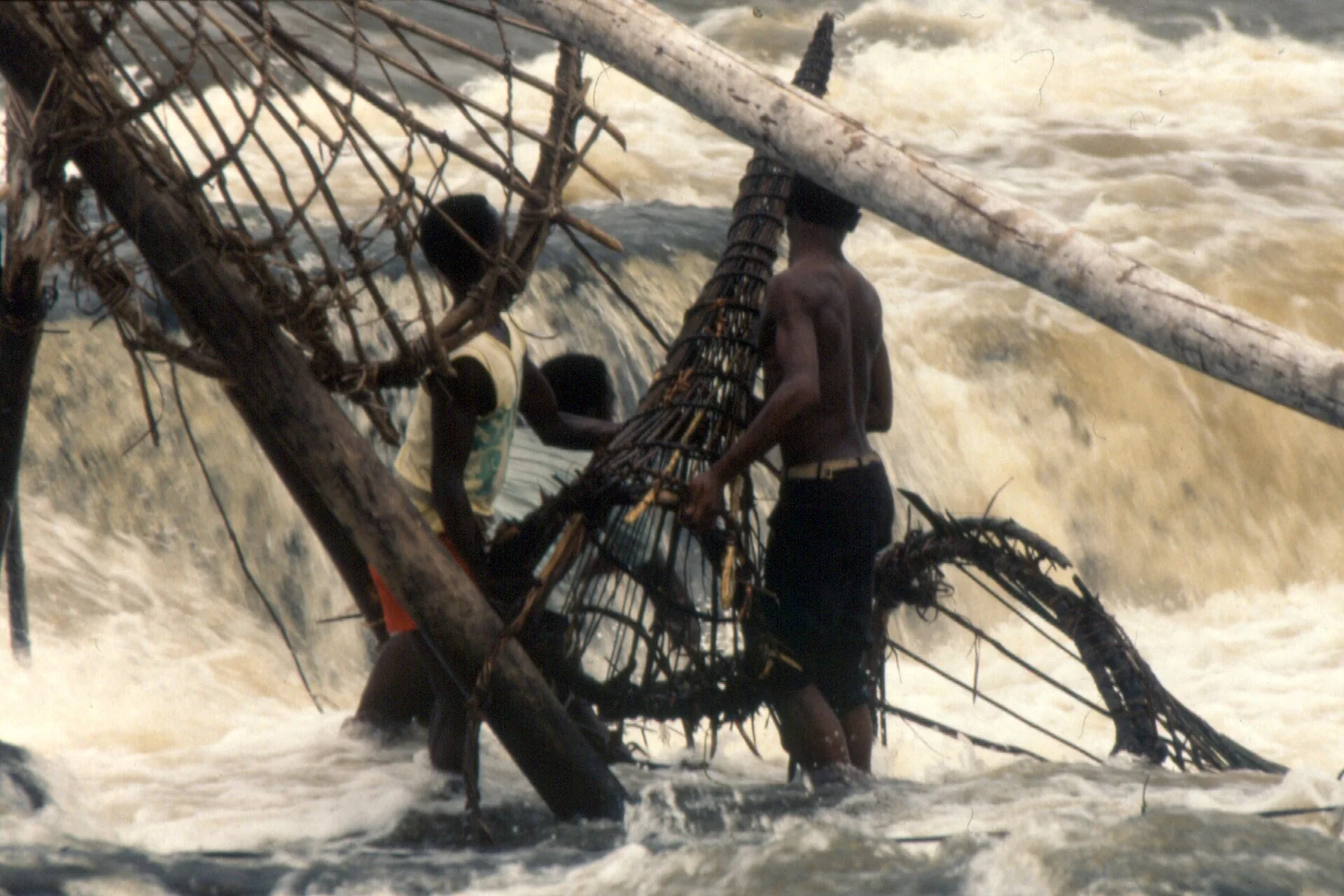
The central Congo forests between the Lomami and Tshuapa rivers are used by numerous village communities for fishing, hunting and farming. Their remoteness delayed industrial logging but did not prevent bushmeat trade and armed activity.

Scientific surveys beginning in the 2000s documented bonobos, okapi and the newly described lesula monkey. Lomami National Park was created in 2016 after years of negotiation with provincial authorities and local communities.

Reorganisation

A landscape reorganised

The park is unusually recent and its boundaries reflect both biological discovery and social negotiation. Its success depends on community agreements and control of commercial hunting rather than a long-established tourism economy.

Details to read

What to read in the landscape

At Lomami National Park, the significance of the feature “Lomami River” goes beyond its visual impact. The river forms the main geographic spine of the park. At Lomami National Park, the detail links local scale with the wider regional pattern.

Look closely at the feature “Bonobo forest” in Lomami National Park; it carries information that a panoramic view can miss. Protected habitat supports important populations. Within Lomami National Park, the feature explains why this destination differs from nearby landscapes.

At Lomami National Park, the feature “Remote research camps” is best understood as part of the surrounding system rather than an isolated stop. Scientific access provides the most responsible route into the interior. Within Lomami National Park, the feature explains why this destination differs from nearby landscapes.

Season and scale

Season, scale and the present day

At Lomami National Park, light, water and temperature reveal different structures at different times of year. For Lomami National Park, the most reliable visiting window is Jun-Aug, Dec-Feb.

For Lomami National Park, the stated visiting window is Jun-Aug, Dec-Feb, but its practical meaning depends on local weather, water and transport rather than the calendar alone.

Placed within its wider geography, Lomami National Park is not an isolated exception. Beyond the best-known image of Lomami National Park feature, Lomami National Park matters because bonobo forest and remote research camps place the destination inside a broader regional story.

Chronology

Key dates

  1. River and forest livelihoods

    Communities used a region with little state infrastructure or road access.

  2. Lesula documented by science

    Researchers encountered a monkey species previously unknown to formal zoology.

  3. Lomami National Park established

    A large protected area was created after extended fieldwork and consultation.

Travel notes

Plan your visit

Time needed
3-5 days
Getting around
Local guide, river transport and forest walking
Effort
Moderate to demanding
Plan first
Guide, permits, health preparation and transfers
Time of day
Early morning and late afternoon
Best window
Jun-Aug, Dec-Feb
Traveller stories

Stories from people who have been here.

First-hand moments, practical notes and overlooked details from Lomami National Park.

Loading traveller stories…

Browse all traveller stories ↗

Keep exploring

Where next?

All place stories