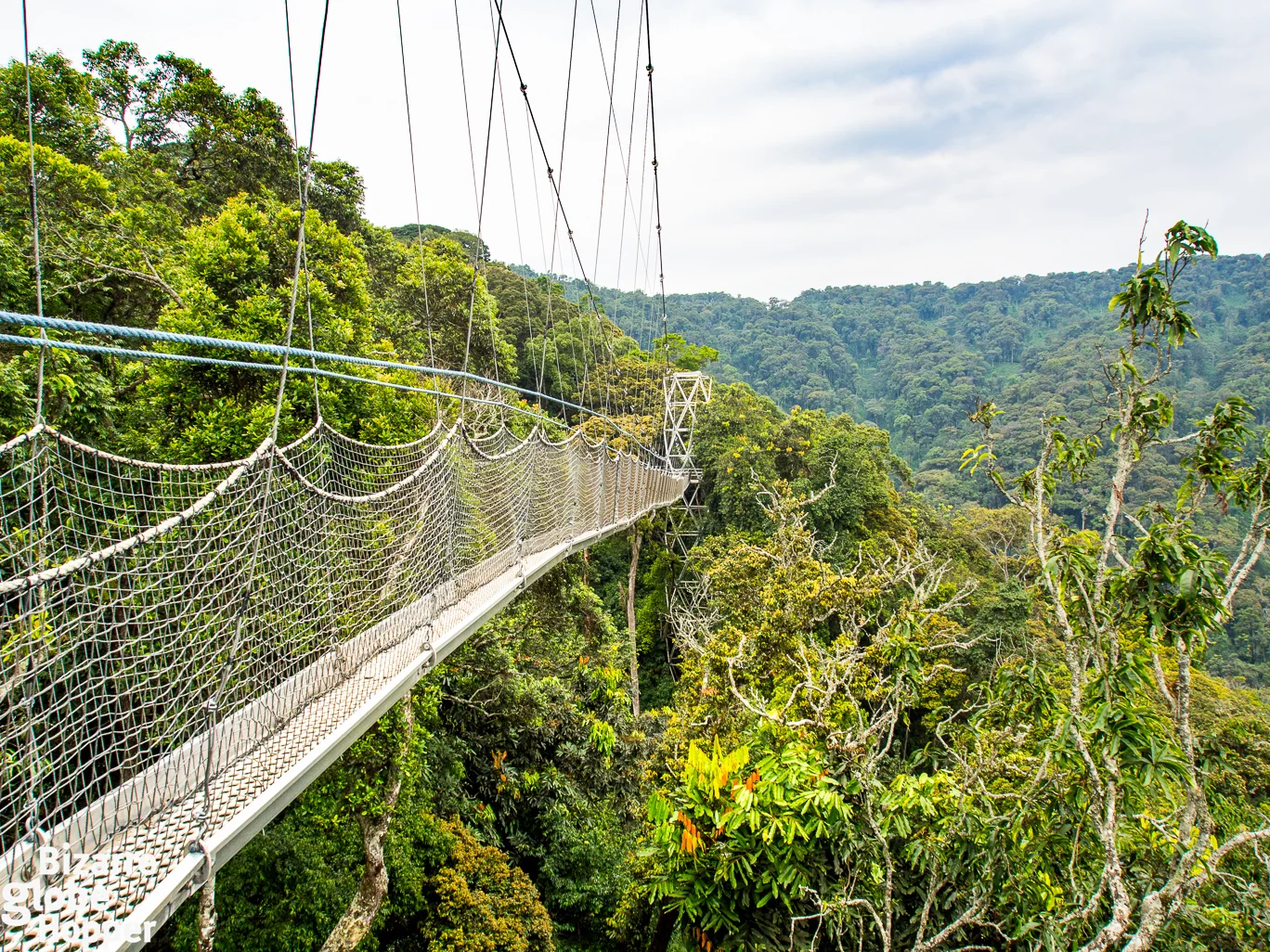
A single visit to Nyungwe Forest captures only one phase of its annual cycle. The two relatively drier periods generally provide easier forest conditions, though rain can occur at any time. Mist often builds during the day. Seasonal fruiting and flowering influence animal movement more than a simple dry-wet division suggests.
For Nyungwe Forest, the main seasonal constraint is: the strongest planning window is Jun-Sep, Dec-Feb. For Nyungwe Forest, outside it, check weather, daylight, road or ferry schedules and seasonal closures before committing to a fixed route.
For Nyungwe Forest, one practical detail matters: cloud, wind and trail conditions can change quickly. For Nyungwe Forest, put the highest or most exposed stop first and keep a lower-level alternative.
Placed within its wider geography, Nyungwe Forest is not an isolated exception. For Nyungwe Forest, the wider context shows that, nyungwe connects with Burundi's Kibira forest and the broader Albertine Rift. For Nyungwe Forest, lake Kivu, tea regions and the highlands toward Congo place the park within one of Africa's most biologically and culturally dense mountain corridors.