Equatorial Atlantic, United Kingdom Overseas Territory
Best window
Jan-Apr
Suggested stay
3-5 days
Go for
Volcanic island exploration
The reason to go
Climb from lava desert into Green Mountain cloud forest
The ecological reversal is extraordinary: barren cinder gives way to dense vegetation created through nineteenth-century planting and persistent mist.
Plan the least frequent boat or flight first, then use the remaining time for the signature route rather than trying to collect every viewpoint.
Look a little closer
Worth discovering
The details that make Ascension Island different.
Photo journal
01
Green Mountain
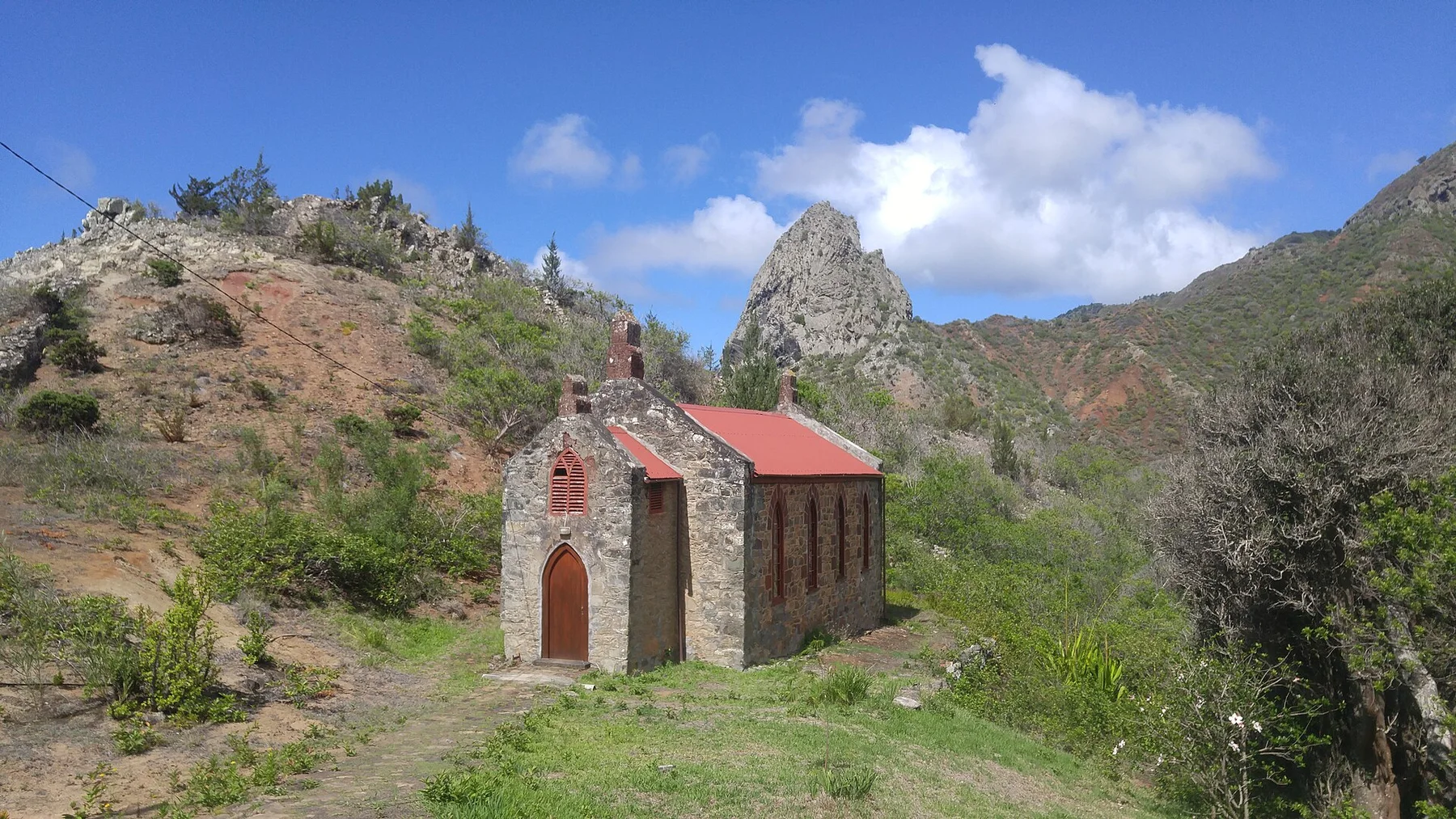
A cool forested summit rises above the dry island.
Photo journal
02
Long Beach turtles
Green turtles nest seasonally near Georgetown.
Destination view
03
Devil’s Ashpit
Volcanic cones and lava fields dominate the lowlands.
Photo journal
A closer look at Ascension Island
9 photographs
01Ascension Sunset (112395107)02Ascension Island — view 203GREEN MOUNTAIN - ASCENSION ISLAND04Ascension Island Green Way (9294)05GREEN MOUNTAIN SETTLEMENT - ASCENSION ISLAND06GREEN MOUNTAIN ASCENSION ISLAND07Ascension Island Lava fields08It is estimated 7,500- 30,000 turtle nests are laid on Ascensions beaches each season09Green Mountain1
Origins and change
A deeper history of Ascension Island
A dry volcanic island contains a man-made cloud forest on Green Mountain and major green-turtle nesting beaches. The view is only the surface of a longer story of formation, use and change.
4 min readEquatorial Atlantic, United Kingdom Overseas Territory
Ascension Island is centred on Equatorial Atlantic, where a dry volcanic island contains a man-made cloud forest on Green Mountain and major green-turtle nesting beaches. The strongest reason to make the journey is to climb from lava desert into green mountain cloud forest.
The familiar invitation at Ascension Island is “Climb from lava desert into Green Mountain cloud forest”, yet that image makes more sense when it is connected to the landform, the local economy and the changes that determined access. The ecological reversal is extraordinary: barren cinder gives way to dense vegetation created through nineteenth-century planting and persistent mist.
Because land is limited, every ridge, bay and passage acquires practical importance. At Ascension Island, “Green Mountain” is where that compressed geography becomes easiest to read. A cool forested summit rises above the dry island.
Ascension Island is not a uniform area. Changes in elevation, exposure, water and substrate produce distinct environments over short distances, which is why a route through the place often reveals more than a fixed viewpoint.
02
Lives and livelihoods
The human landscape behind the scenery
Ascension remained uninhabited after its early-sixteenth-century discovery because it had little fresh water and no natural harbour. Britain garrisoned the island in 1815, when Napoleon was sent to nearby Saint Helena, and Georgetown developed as a naval supply and communications station rather than a conventional colony.
Green Mountain records an unusual nineteenth-century environmental experiment. Following ideas discussed by Charles Darwin and advanced by botanist Joseph Hooker, imported trees and crops were planted across the high slopes to capture moisture and improve water supply. The resulting cloud forest is therefore partly engineered, while the dry lowlands still expose the island's volcanic cones and lava.
03
Turning point
The transition visible today
Telegraph cables, wartime aviation, tracking stations and satellite communications repeatedly gave Ascension strategic value far beyond its size. The same infrastructure history now sits beside turtle conservation, restored seabird colonies and the careful management of introduced species.
04
On the ground
What to read in the landscape
At Ascension Island, the feature “Green Mountain” is best understood as part of the surrounding system rather than an isolated stop. A cool forested summit rises above the dry island. Its position and condition at Ascension Island connect physical history with the way people use the place now.
Start with the feature “Long Beach turtles”, because it condenses a much larger part of the story of Ascension Island. Green turtles nest seasonally near Georgetown. At Ascension Island, it gives a concrete reference point for reading change rather than merely collecting viewpoints.
At Ascension Island, the feature “Devil’s Ashpit” is one of the most useful pieces of visible evidence. Volcanic cones and lava fields dominate the lowlands. Within Ascension Island, it is both an attraction and a record of the processes described above.
05
Present day
The current chapter
At Ascension Island, season is part of the landscape history, not merely a planning detail. For Ascension Island, the most reliable visiting window is Jan-Apr.
For Ascension Island, the stated visiting window is Jan-Apr, but its practical meaning depends on local weather, water and transport rather than the calendar alone.
Placed within its wider geography, Ascension Island is not an isolated exception. Beyond the best-known image of Ascension Island feature, Ascension Island matters because long beach turtles and devil’s ashpit place the destination inside a broader regional story.
Chronology
Key dates
British garrison established
A naval detachment occupied Ascension as part of the security system surrounding Napoleon's exile.
Green Mountain transformed
Large-scale planting created a wetter, wooded summit above the naturally arid volcanic island.
Atlantic communications hub
Cable, aviation, military and space-tracking facilities made the island a strategic mid-ocean station.
Travel notes
Plan your visit
Time needed
3-5 days
Getting around
Local transport, walking and boat or ferry connections
Effort
Easy to moderate
Plan first
Main flight or ferry, accommodation and weather backup
Time of day
Morning movement; late light for coast
Best window
Jan-Apr
Traveller stories
Stories from people who have been here.
First-hand moments, practical notes and overlooked details from Ascension Island.