Granite spires, clear lakes and dense Siberian forest form a compact mountain park in the Western Sayan. The view is only the surface of a longer story of formation, use and change.
4 min readWestern Sayan Mountains, Russia
Ergaki Nature Park is centred on Western Sayan Mountains, where granite spires, clear lakes and dense Siberian forest form a compact mountain park in the Western Sayan. The strongest reason to make the journey is to see the hanging stone above lake raduzhnoye.
Many visits to Ergaki Nature Park begin with the experience described as “See the Hanging Stone above Lake Raduzhnoye”. The more revealing question is why it exists here, how people used the surrounding ground and what remains visible from earlier phases. A huge granite block appears balanced on a steep slope; reaching the viewpoint links forest, lake and one of Siberia's most distinctive rock forms.
At Ergaki Nature Park, the physical story begins with the structure of the ground. Ridges, valleys and changing elevation create several distinct micro-landscapes. The strongest views usually require an early start and enough time to continue beyond the first accessible viewpoint.
Relief controls far more than the view. At Ergaki Nature Park, “Hanging Stone” reveals how elevation divides vegetation, weather, water and the routes available to people. A giant boulder seems poised above the valley.
02
Human history
Lives shaped by the terrain
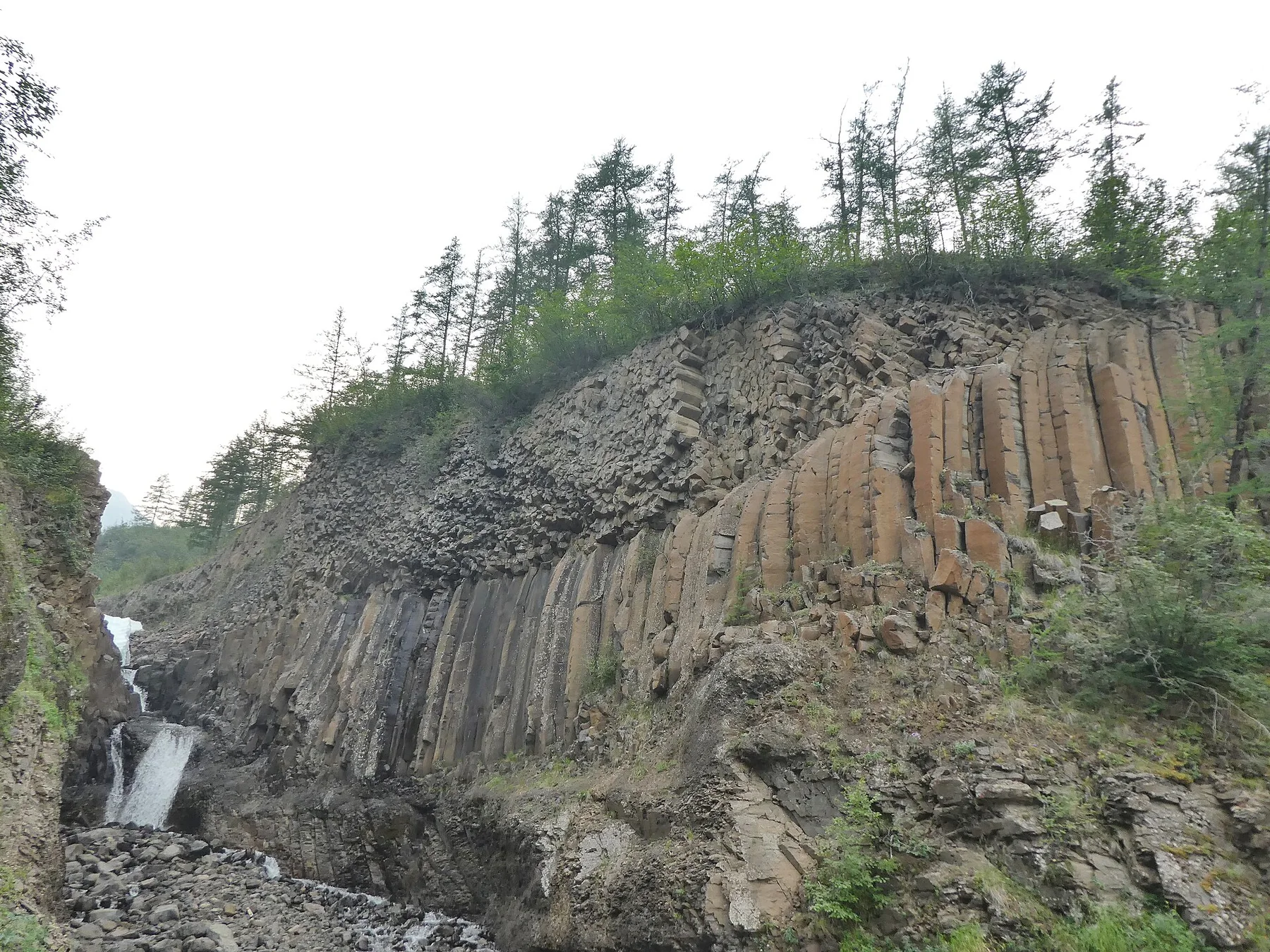
Ergaki's granite ridges were shaped by uplift, glaciation and intense frost weathering, producing the sharp profiles now known as the Sleeping Sayan and Bird peaks. The surrounding Sayan region has long been used by Indigenous and pastoral communities moving between forest and high summer ground.
Soviet-era mountaineers and local outdoor clubs established camps and routes, while road construction along the Yenisei corridor made the western Sayan more accessible. Ergaki Nature Park was created in 2005 to manage increasing recreation and protect mountain ecosystems.
03
Turning point
The change that redefined the place
The park formalised trails and camps but also concentrated visitors in fragile lake basins. Its modern history is therefore one of rapidly expanding domestic tourism in a landscape whose granite forms had previously been reached mainly by local users and climbers.
04
Field notes
The small features that reveal the larger pattern
Start with the feature “Hanging Stone”, because it condenses a much larger part of the story of Ergaki Nature Park. A giant boulder seems poised above the valley. Within Ergaki Nature Park, the feature explains why this destination differs from nearby landscapes.
At Ergaki Nature Park, the feature “Lake Svetloye” is best understood as part of the surrounding system rather than an isolated stop. A clear mountain lake reflects the Bird and Star peaks. Within Ergaki Nature Park, it is both an attraction and a record of the processes described above.
At Ergaki Nature Park, the feature “Sleeping Sayan ridge” is best understood as part of the surrounding system rather than an isolated stop. The skyline resembles a reclining figure from several viewpoints. For Ergaki Nature Park, that relationship is more informative than treating the feature only as a photograph or checklist item.
05
Present day
What continues to change
Ergaki Nature Park changes through the year because weather and biological cycles rearrange what can be seen and used. For Ergaki Nature Park, the most reliable visiting window is Jun-Sep.
For Ergaki Nature Park, the stated visiting window is Jun-Sep, but its practical meaning depends on local weather, water and transport rather than the calendar alone.
Placed within its wider geography, Ergaki Nature Park is not an isolated exception. Beyond the best-known image of Ergaki Nature Park feature, Ergaki Nature Park matters because lake svetloye and sleeping sayan ridge place the destination inside a broader regional story.
Chronology
Key dates
Granite ridges carved
Ice and frost shaped cirques, lakes and steep residual peaks.
Mountaineering routes develop
Clubs and camps opened the western Sayan to organised recreation.
Ergaki Nature Park established
Regional protection responded to ecological value and growing visitor pressure.
Travel notes
Plan your visit
Time needed
2-4 days
Getting around
Road access to trailheads, then hiking
Effort
Moderate to demanding
Plan first
Trail conditions, weather and transport to the start
Time of day
Start early for clearer conditions
Best window
Jun-Sep
Traveller stories
Stories from people who have been here.
First-hand moments, practical notes and overlooked details from Ergaki Nature Park.