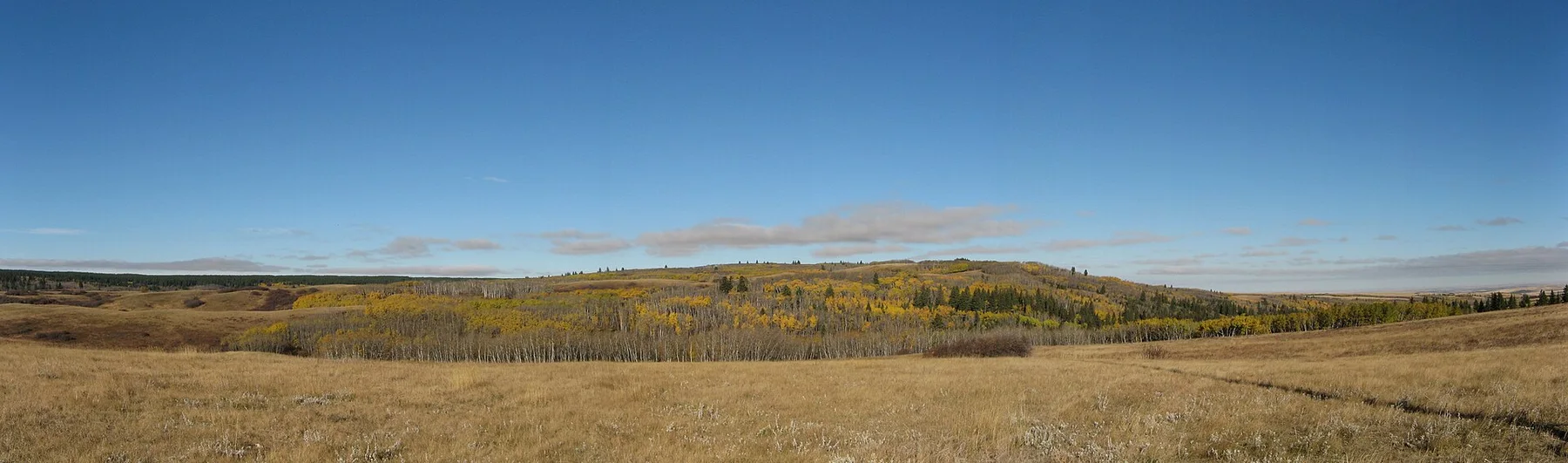
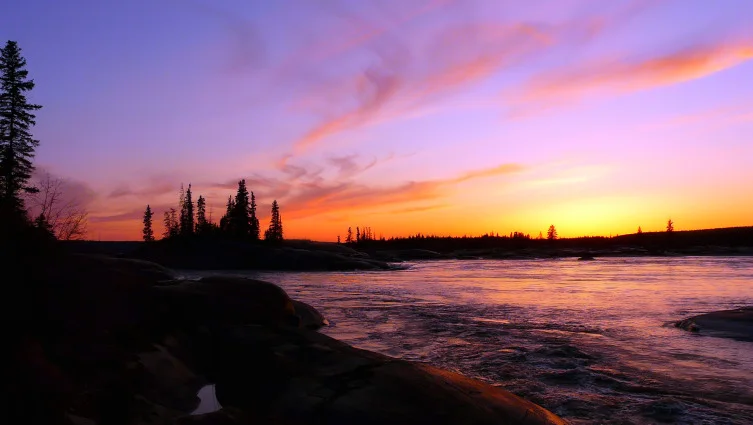
Native prairie, badlands and one of Canada's darkest night skies stretch along the US border. The view is only the surface of a longer story of formation, use and change.
4 min readSouthern Saskatchewan, Canada
Grasslands National Park is centred on Southern Saskatchewan, where native prairie, badlands and one of Canada's darkest night skies stretch along the US border. The strongest reason to make the journey is to sleep under the dark sky after watching a prairie-dog colony.
Many visits to Grasslands National Park begin with the experience described as “Sleep under the dark sky after watching a prairie-dog colony”. The more revealing question is why it exists here, how people used the surrounding ground and what remains visible from earlier phases. The park is strongest as a full cycle from daylight wildlife to complete night darkness, with almost no artificial horizon glow.
At Grasslands National Park, the physical story begins with the structure of the ground. The terrain is subtle rather than flat: long ridges, coulees, dunes and river breaks become visible with low light and slow travel. Wildlife often provides the main sense of scale.
The landscape of Grasslands National Park can look static, yet wind, runoff and temperature continue to reshape it. “Frenchman River Valley” is a concise example of that ongoing change. Grassland wildlife concentrates around the broad valley.
02
Lives and livelihoods
The cultural layer of the place
The mixed-grass prairie was shaped by bison, fire and Indigenous land management over thousands of years. Tipi rings, bison-drive sites and other archaeological remains show that the open terrain was intensively known and used rather than empty.
After bison herds collapsed in the nineteenth century, ranching became the dominant visible land use. Because plough agriculture was limited in the driest sections, substantial native grassland survived where it disappeared elsewhere across the Canadian plains.
03
Reorganisation
What altered the old balance
Grasslands National Park was created incrementally from the 1980s, purchasing and managing ranch lands rather than enclosing an untouched wilderness. Plains bison were reintroduced in 2005, restoring an ecological force absent for more than a century.
04
Details to read
Landmarks that carry the deeper story
At Grasslands National Park, the feature “Frenchman River Valley” is one of the most useful pieces of visible evidence. Grassland wildlife concentrates around the broad valley. Its position and condition at Grasslands National Park connect physical history with the way people use the place now.
Start with the feature “Badlands Parkway”, because it condenses a much larger part of the story of Grasslands National Park. Short stops reveal eroded formations and fossil country. For Grasslands National Park, that relationship is more informative than treating the feature only as a photograph or checklist item.
At Grasslands National Park, the feature “Dark-sky preserve” is best understood as part of the surrounding system rather than an isolated stop. Clear nights expose the Milky Way above open prairie. Within Grasslands National Park, the feature explains why this destination differs from nearby landscapes.
05
Continuity
Season, scale and the present day
A single visit to Grasslands National Park captures only one phase of its annual cycle. For Grasslands National Park, the most reliable visiting window is May-Oct.
For Grasslands National Park, the stated visiting window is May-Oct, but its practical meaning depends on local weather, water and transport rather than the calendar alone.
Placed within its wider geography, Grasslands National Park is not an isolated exception. Beyond the best-known image of Grasslands National Park feature, Grasslands National Park matters because badlands parkway and dark-sky preserve place the destination inside a broader regional story.
Chronology
Key dates
Bison and Indigenous prairie
Hunting, fire and seasonal movement shaped the grassland mosaic.
Bison collapse and ranching expansion
Commercial slaughter and settlement replaced migratory herds with fenced livestock ranges.
National park and bison return
Land acquisition protected native prairie and enabled reintroduction of plains bison.
Travel notes
Plan your visit
Time needed
2-3 days
Getting around
Car, scenic roads and walking trails
Effort
Easy to moderate
Plan first
Accommodation, fuel and wildlife conditions
Time of day
Sunrise and the final hours of light
Best window
May-Oct
Traveller stories
Stories from people who have been here.
First-hand moments, practical notes and overlooked details from Grasslands National Park.