Ammeln Valley
Granite walls rise above villages, palms and cultivated terraces.
Start early and make this the first exposed stop of the day. Keep a lower route ready if cloud, heat, wind or trail conditions change during Oct-Apr.
Granite domes, almond valleys and Amazigh villages occupy a dry mountain basin in Morocco’s Anti-Atlas.
Granite walls rise above villages, palms and cultivated terraces.
Start early and make this the first exposed stop of the day. Keep a lower route ready if cloud, heat, wind or trail conditions change during Oct-Apr.
The details that make Tafraoute and the Anti-Atlas different.
Granite walls rise above villages, palms and cultivated terraces.
Large boulders give the basin its instantly recognisable geometry.
Stone settlements and agricultural patterns remain central to the landscape.
Granite domes, almond valleys and Amazigh villages occupy a dry mountain basin in Morocco’s Anti-Atlas. Its character becomes clearer when geology, settlement and modern protection are considered together.
Tafraoute and the Anti-Atlas occupies a mountain basin south of Agadir. Granite domes, almond valleys and Amazigh villages occupy a dry mountain basin in Morocco’s Anti-Atlas. Tafraoute links the Souss plain with remote Anti-Atlas roads, painted rock landmarks and fortified villages toward Tata and Tiznit.
Many visits to Tafraoute and the Anti-Atlas begin with the experience described as “Ammeln Valley”. The more revealing question is why it exists here, how people used the surrounding ground and what remains visible from earlier phases. Granite walls rise above villages, palms and cultivated terraces.
Continue to practical planningThe first layer of Tafraoute and the Anti-Atlas is geological and ecological rather than scenic. Rounded pink granite, folded ridges and dry valleys create a softer but highly sculptural alternative to the High Atlas.
Relief controls far more than the view. At Tafraoute and the Anti-Atlas, “Ammeln Valley” reveals how elevation divides vegetation, weather, water and the routes available to people. Granite walls rise above villages, palms and cultivated terraces.
Tafraoute and the Anti-Atlas has been shaped as much by livelihoods and movement as by natural processes. Villages, terraces and seasonal agriculture show how Amazigh communities have worked with limited water and stony soils.
At Tafraoute and the Anti-Atlas, “Napoleon’s Hat and rock forms” should not be treated as a decorative detail. Large boulders give the basin its instantly recognisable geometry. The feature records how construction, movement or livelihood adapted to local conditions at Tafraoute and the Anti-Atlas.
The decisive modern change at Tafraoute and the Anti-Atlas was access. At Tafraoute and the Anti-Atlas, transport and visitor infrastructure made the landscape easier to reach while concentrating pressure at the few points where roads, boats or trails enter it. Tafraoute and the Anti-Atlas should therefore be read as an evolving cultural landscape rather than a timeless scene.
At Tafraoute and the Anti-Atlas, the feature “Ammeln Valley” provides a precise clue to how the landscape works. Granite walls rise above villages, palms and cultivated terraces. Its position and condition at Tafraoute and the Anti-Atlas connect physical history with the way people use the place now.
At Tafraoute and the Anti-Atlas, the feature “Napoleon’s Hat and rock forms” is one of the most useful pieces of visible evidence. Large boulders give the basin its instantly recognisable geometry. At Tafraoute and the Anti-Atlas, the detail links local scale with the wider regional pattern.
Start with the feature “Amazigh villages”, because it condenses a much larger part of the story of Tafraoute and the Anti-Atlas. Stone settlements and agricultural patterns remain central to the landscape. At Tafraoute and the Anti-Atlas, it gives a concrete reference point for reading change rather than merely collecting viewpoints.
Tafraoute and the Anti-Atlas changes through the year because weather and biological cycles rearrange what can be seen and used. Winter and spring are most comfortable; almond blossom can transform the valleys, while summer heat is intense.
For Tafraoute and the Anti-Atlas, the main seasonal constraint is: the strongest planning window is Oct-Apr. For Tafraoute and the Anti-Atlas, outside it, check weather, daylight, road or ferry schedules and seasonal closures before committing to a fixed route.
For Tafraoute and the Anti-Atlas, one practical detail matters: distances, fuel, food and mobile coverage can be less predictable than the map suggests. For Tafraoute and the Anti-Atlas, carry offline maps and keep a margin in the schedule.
Placed within its wider geography, Tafraoute and the Anti-Atlas is not an isolated exception. For Tafraoute and the Anti-Atlas, the wider context shows that, tafraoute links the Souss plain with remote Anti-Atlas roads, painted rock landmarks and fortified villages toward Tata and Tiznit.
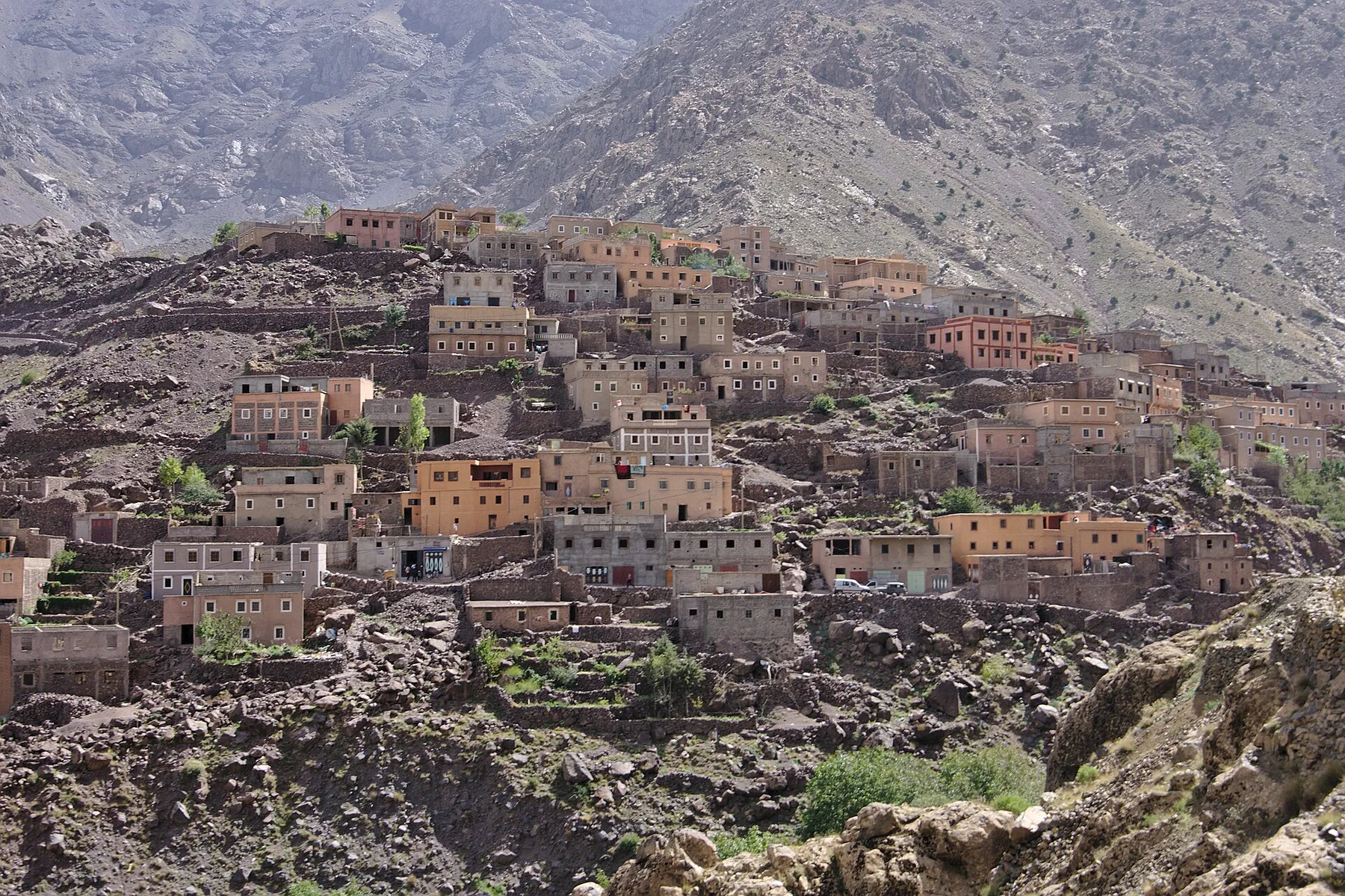
High Atlas valleys, Amazigh villages, walnut terraces and snow-fed streams surround North Africa highest mountain.
Explore this place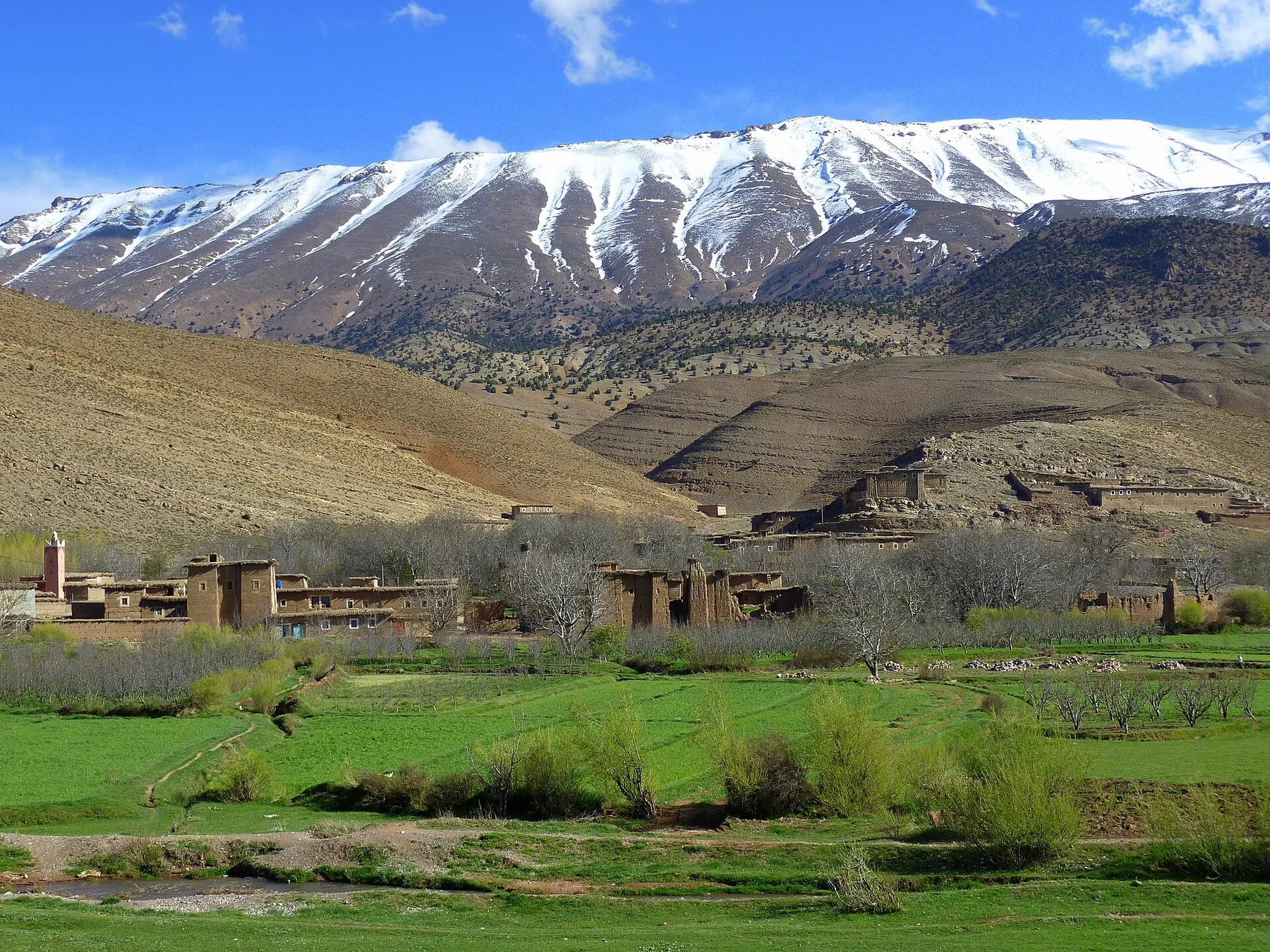
Irrigated fields, earthen villages and high mountain ridges form a broad inhabited valley in Morocco's central High Atlas.
Explore this place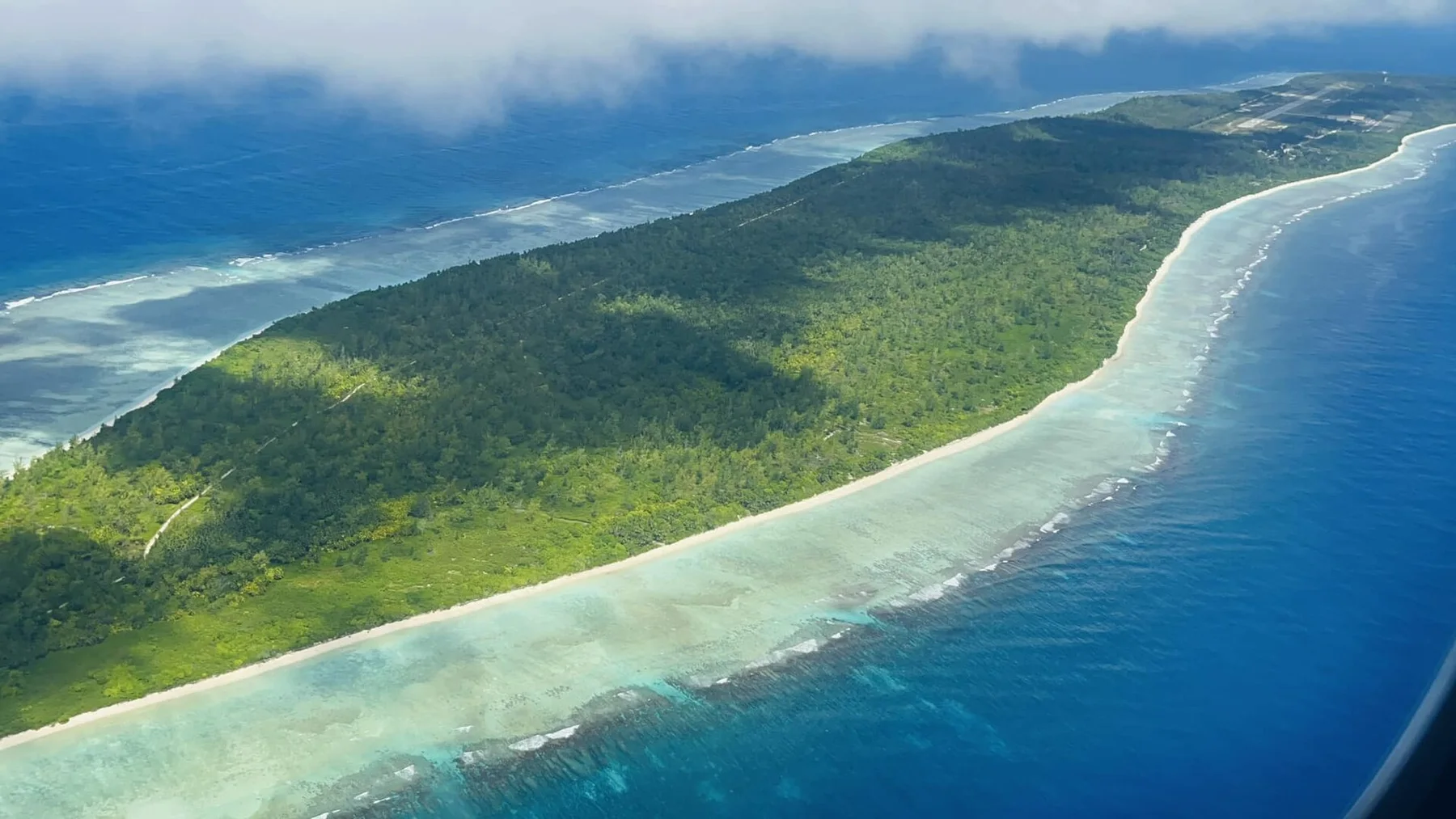
Two long, low coral islands support coconut groves, a small community and bright lagoon water far north of Mauritius.
Explore this place